
Theory of Change
How learning becomes leadership, and leadership becomes livelihood.
Kulea Hive’s Theory of Change is a family of three diagrams. One institutional. Two programmatic. Read together, they show how each layer of our work reinforces the next.
The diagrams that follow are the same ones we work from internally. The Institutional Theory of Change describes Kulea Hive as a whole. The two programme diagrams show how that theory takes shape in the field, first through ConnectEd, then through LEAP. Together they form a single line of sight from inputs to impact.
01 · Institutional
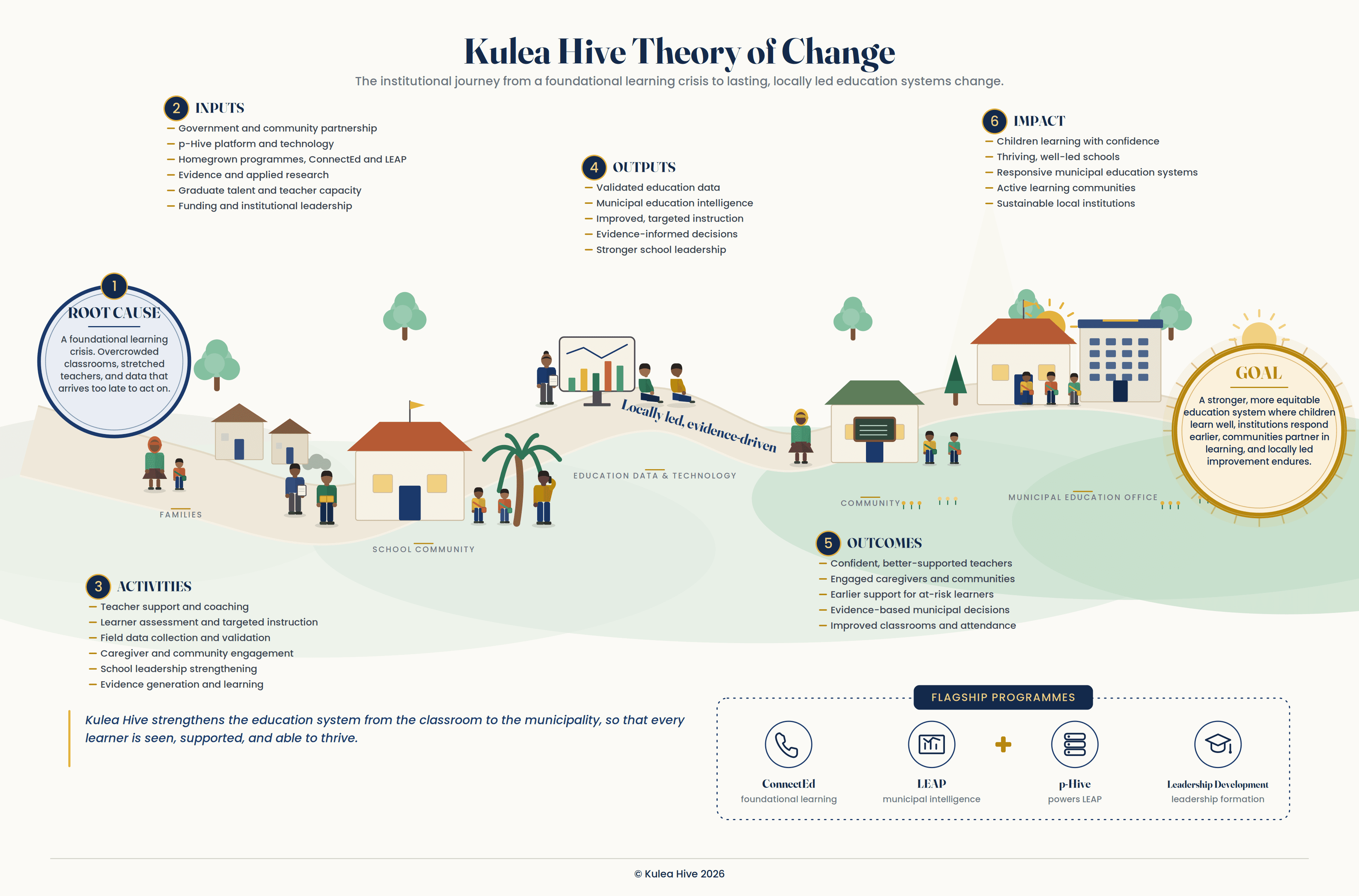
Kulea Hive Theory of Change
The whole system view. How our inputs, activities, outputs, outcomes, and long-term impact connect across the organisation.
Two programme lenses on the same system.
02 · Programme
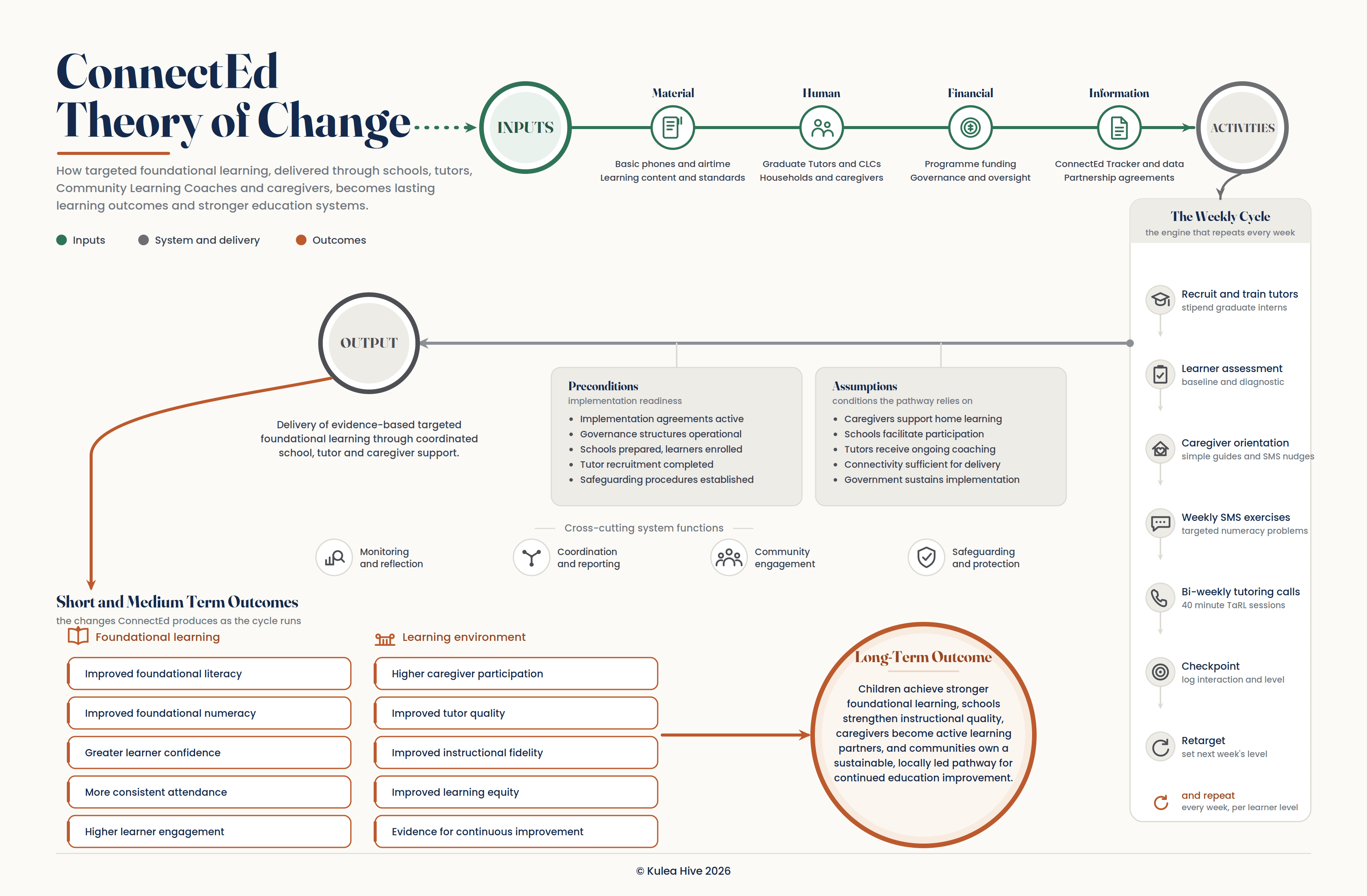
ConnectEd Theory of Change
Foundational literacy and numeracy, delivered through schools, tutors, coaches, and caregivers.
03 · Programme
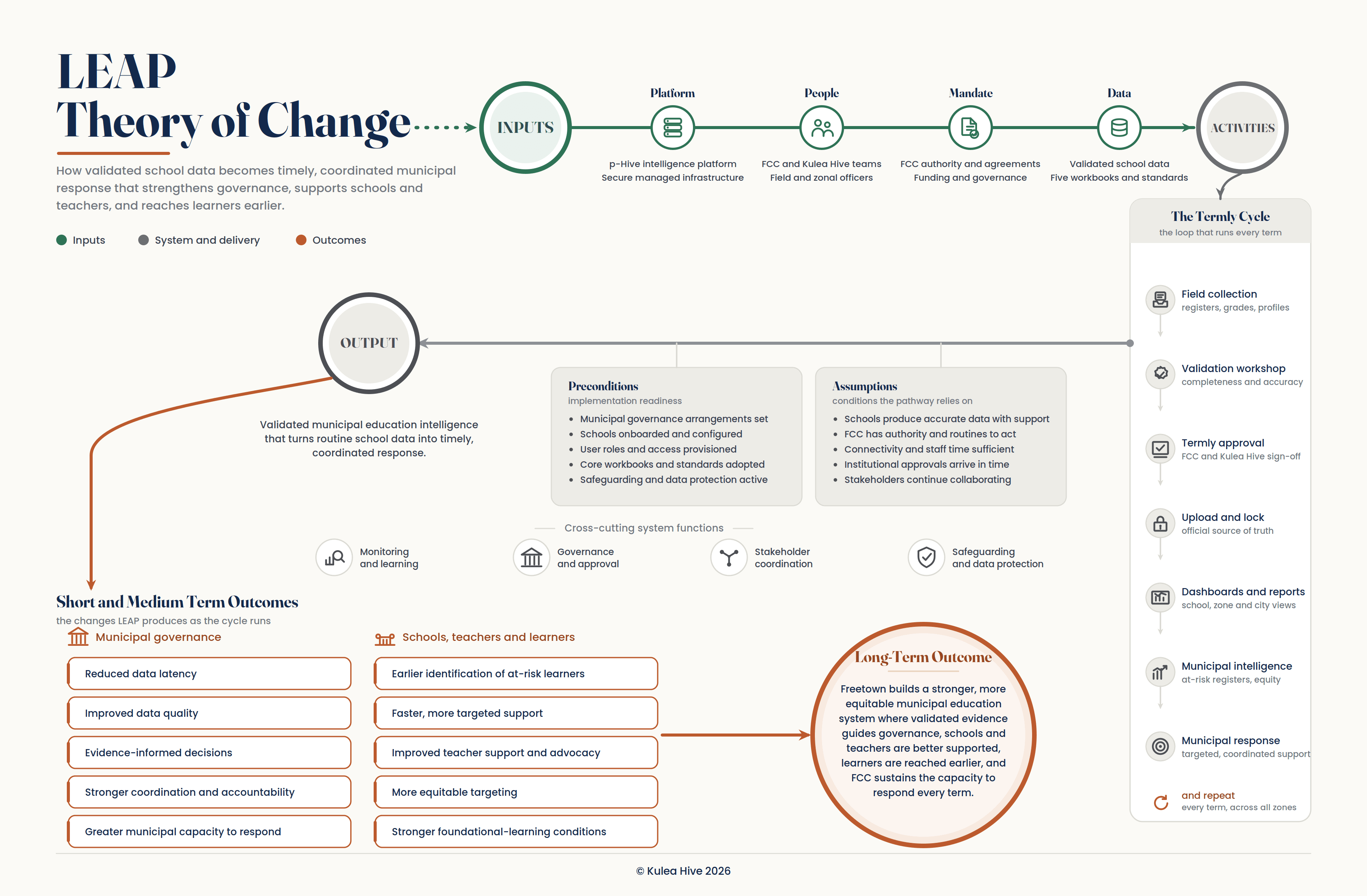
LEAP Theory of Change
Municipal education intelligence, powered by p-Hive, in partnership with Freetown City Council.
Go deeper
Explore every connection behind the diagrams.
Open the interactive Theory of Change Explorer to trace every pathway, relationship and assumption behind Kulea Hive’s institutional and programme Theory of Change.